News
Čierna nad Tisou: Slovakia’s Primary Dry Port
On the map of Slovakia, you can find a town that was literally built from scratch – and it owes its existence to the railway. Čierna nad Tisou was once exceptional, its importance gradually declined, but today a new future is emerging.
Freight transport in transition
Rail freight across Europe is struggling with declining volumes. Trucks are increasingly taking over the market for single-wagon shipments, while the transformation of European industry has led to the disappearance of entire block trains with traditional commodities.
For years, intermodal transport has been seen as the main opportunity – both maritime (containers) and continental (swap bodies or complete semi-trailers on trains). Another important segment consists of block trains concentrated in seaports and moving inland into Europe.
Slovakia may not have a coastline, but it does have a hub where goods are transferred between the European 1,435 mm gauge and the eastern 1,520 mm broad gauge. These two rail worlds meet precisely at Čierna nad Tisou.
Where broad gauge meets standard gauge
Slovakia has two broad-gauge connections from Ukraine: from Uzhhorod to Haniska near Košice, which supplies the steelworks, and from Chop to Dobrá near Čierna nad Tisou. This makes the area one of the most important “gauge break points” in the European Union.
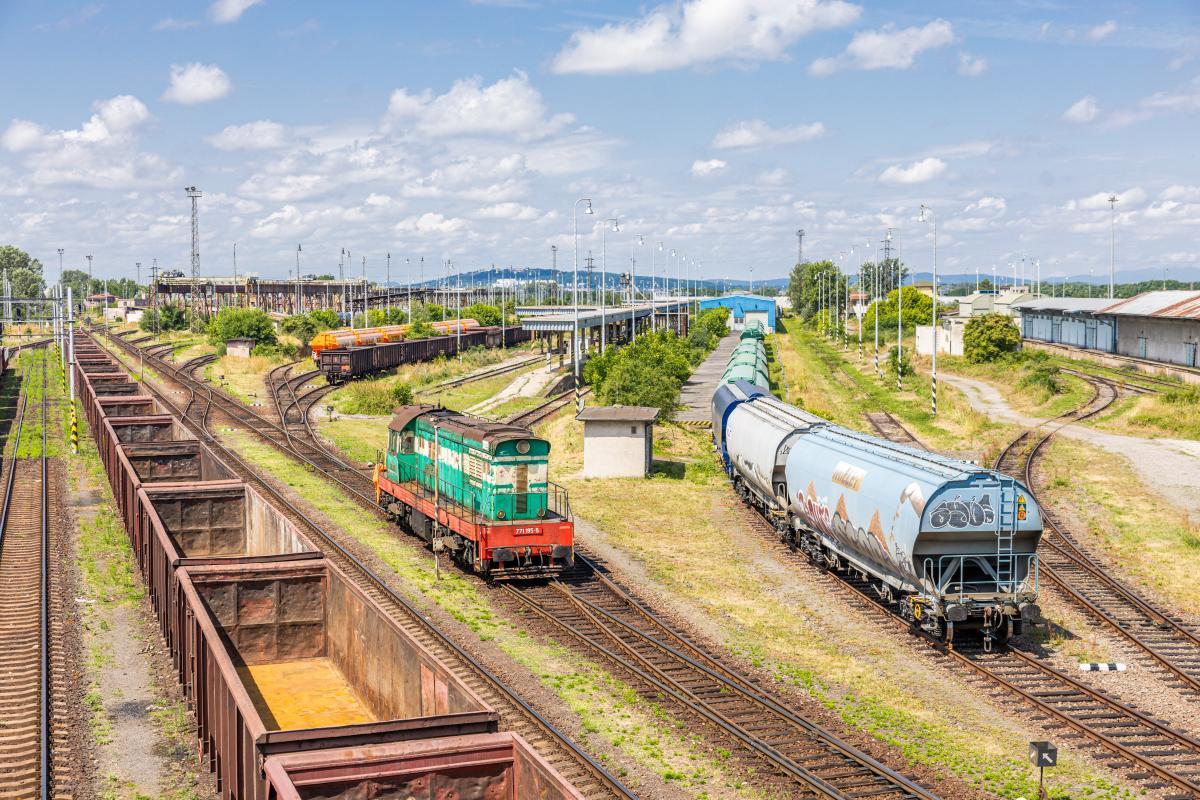
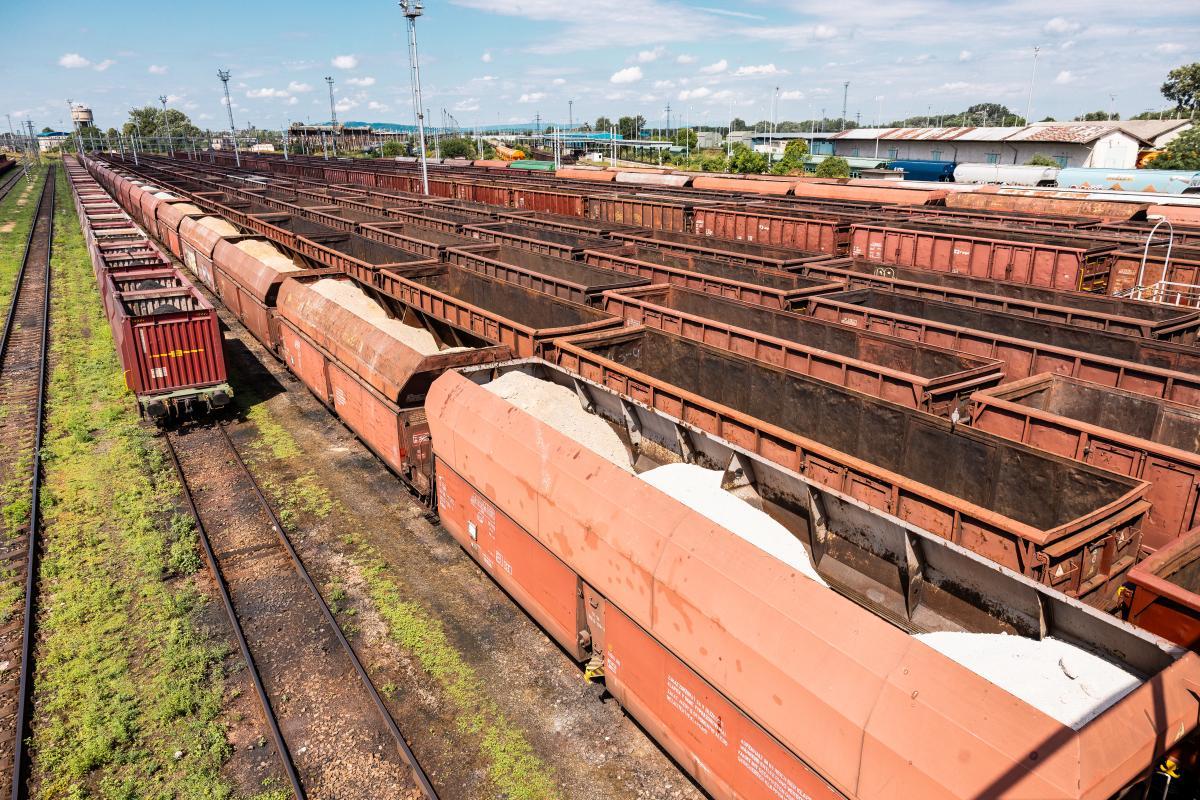
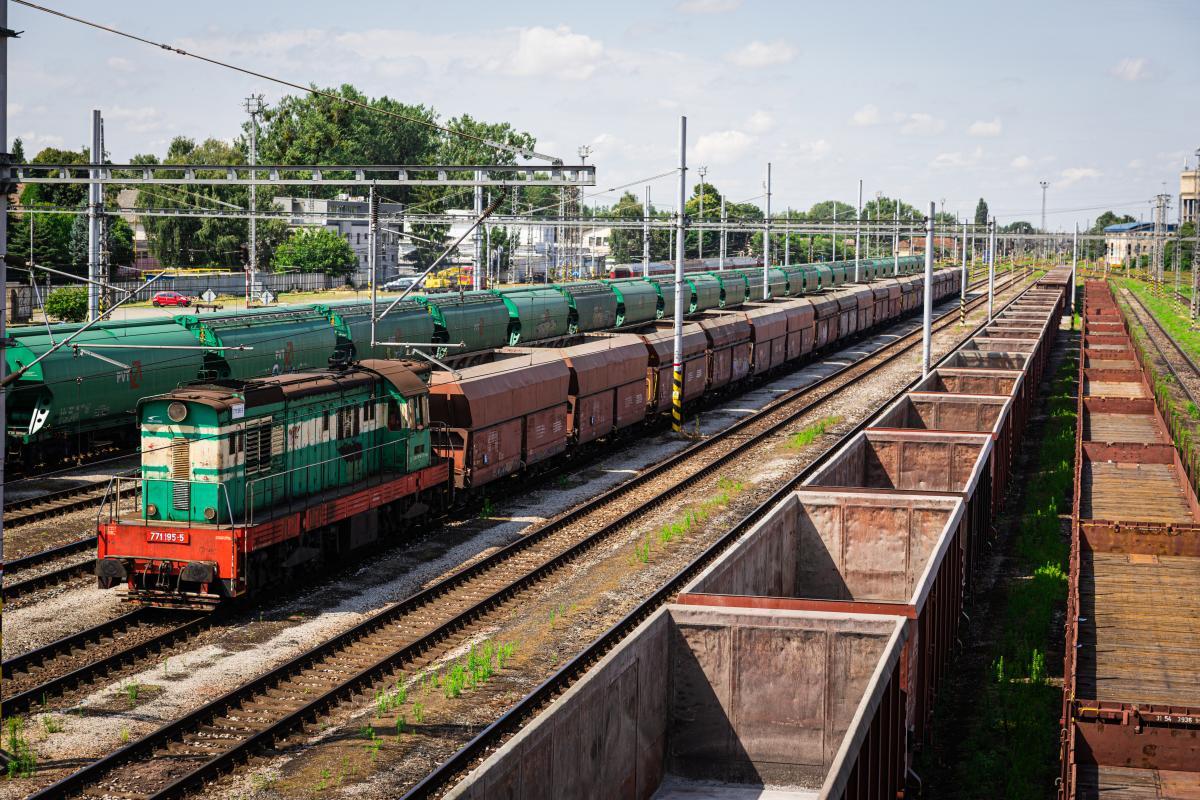
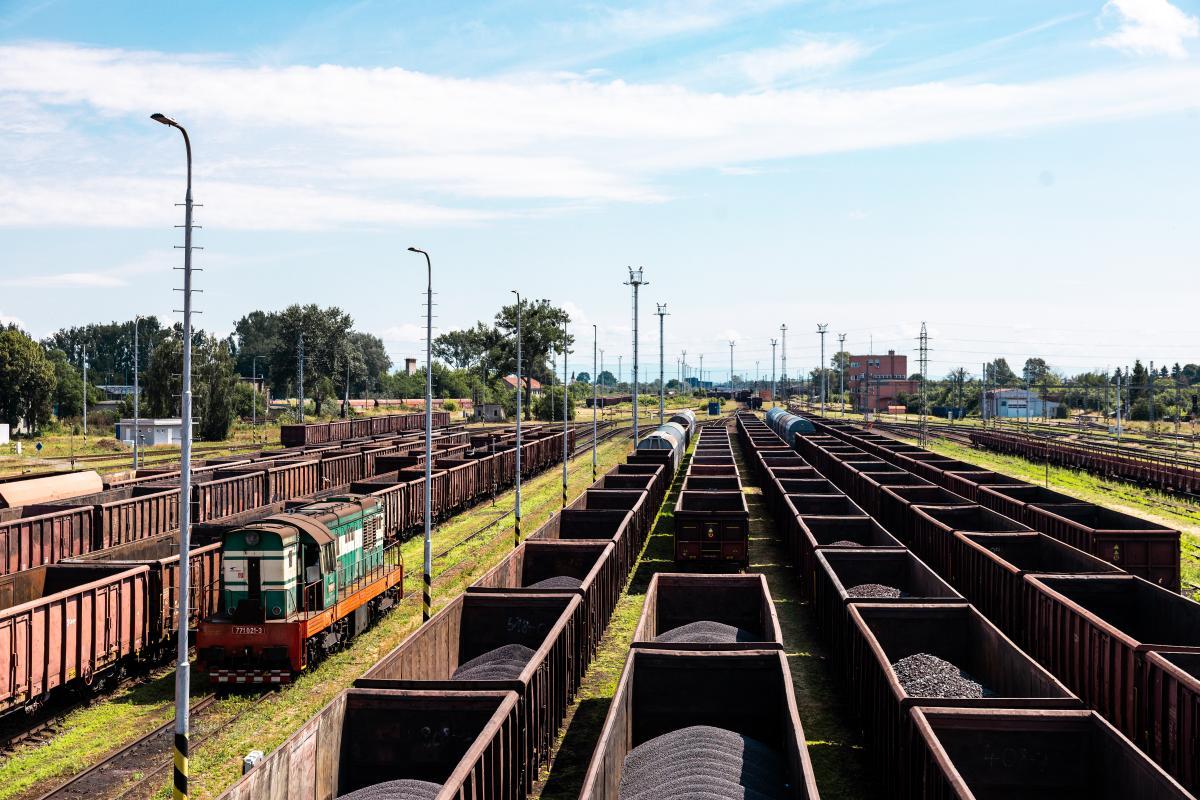
The Čierna nad Tisou railway station lies on the line from Košice through Slovenské Nové Mesto to Chop in Ukraine. It features an extensive yard with dozens of mainline, handling, and transshipment tracks. To the east are transshipment complexes for bulk commodities such as ore, as well as pumping facilities for edible oils.
Past: History of transshipment from grain to ore
The transshipment hub began to grow after 1947, when a broad-gauge line from the Soviet Union reached Slovakia. Initially, it was used for grain transfers during droughts; later, equipment for bogie exchange and additional capacities were added. The range of goods gradually expanded – in addition to oil and fertilizers, machinery, construction materials, and foodstuffs were also handled.
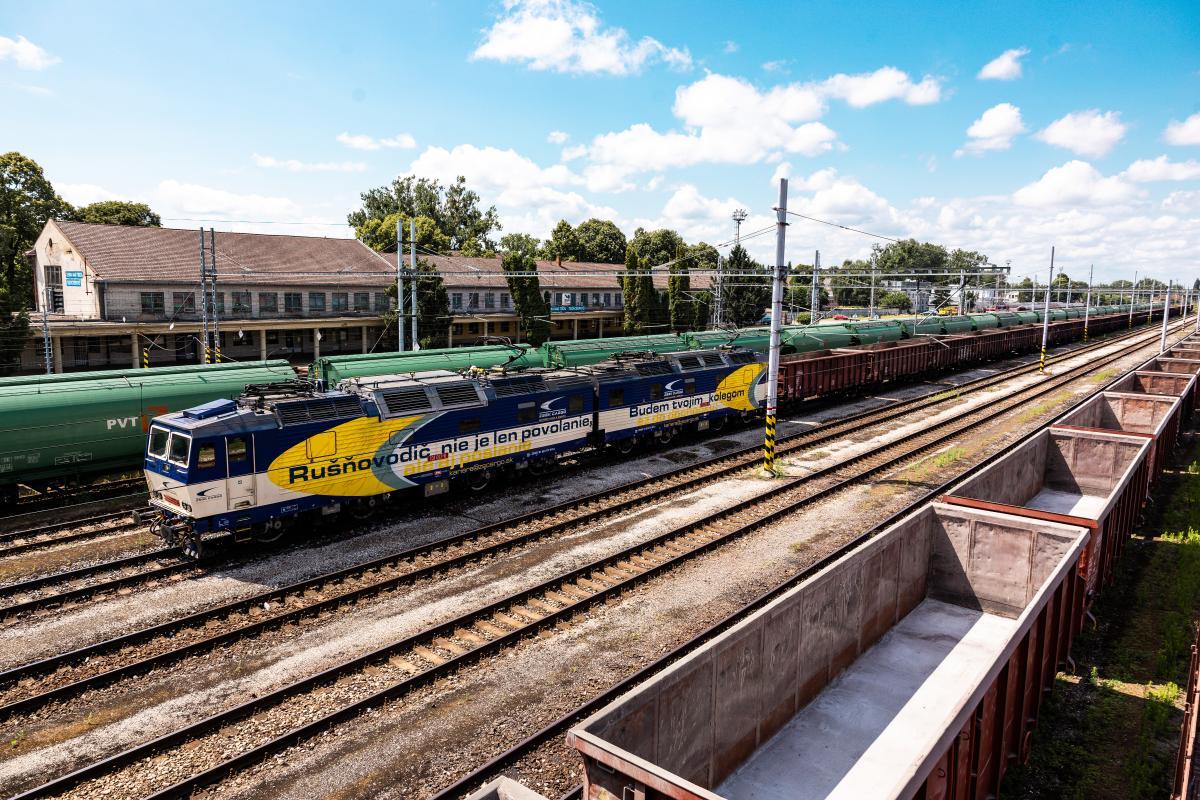
Today, the Čierna nad Tisou facilities and the adjacent Dobrá terminal form one of the key interface points between the EU and Ukraine. For ZSSK CARGO, they represent both large volumes of bulk commodities and growth potential linked to the post-war reconstruction of Ukraine and flows from Asia via the Black Sea.
Present: Ore dominance, intermodal potential
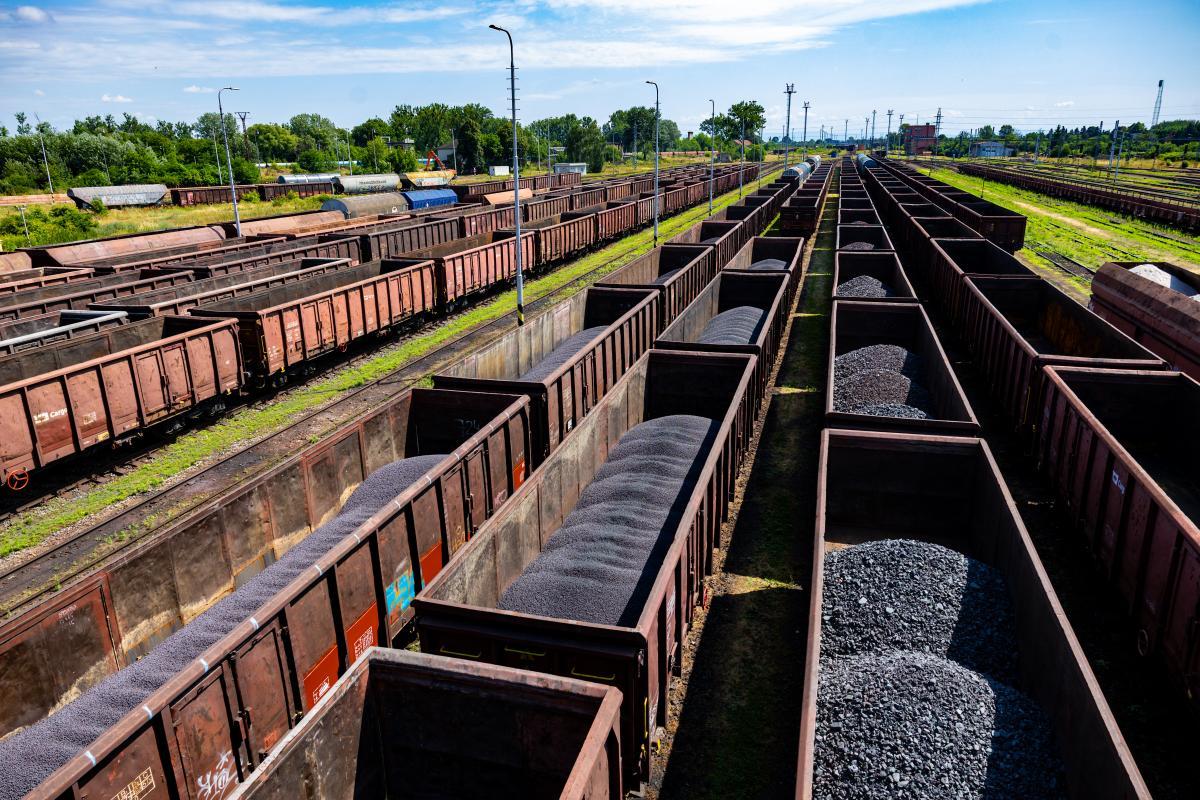
At present, the hub mainly handles iron ore transported via Slovakia to the Czech Republic and Austria. Ukraine is the world’s tenth largest producer of iron ore and holds around 12% of global reserves.
In addition, hundreds of thousands of tonnes of other commodities are processed here annually. Edible oils, of which Ukraine is a major producer, flow into the EU, while in the opposite direction fuel shipments have intensified after the Ukrainian phase-out of Russian sources.
The modernization of bulk cargo handling is supported by automated rotary dumpers, enabling rapid unloading onto conveyor belts and into ZSSK CARGO wagons.
Right next to the station is the Dobrá Combined Transport Terminal, operated by Bulk Transshipment Slovakia (40% owned by ZSSK CARGO). It can handle approximately 430 TEU per day, equal to about 4.5 full container trains. Its advantage lies in the proximity of both gauges directly under gantry cranes.
The EU–Ukraine dry port
Transshipment hubs on the EU’s eastern border function as dry ports, where cargo is shifted between gauges. Since 2022, Čierna nad Tisou has been part of the Solidarity Lanes initiative supporting Ukrainian exports. Passing through here are not only agri-commodities, but also ores, steel, and even kaolin.
Future: Ukraine’s reconstruction and new flows
Ukraine’s reconstruction will require hundreds of billions of euros. Investments will flow into housing, infrastructure, energy, and industry, creating demand for cement, steel, construction materials, and consumer goods.
Household renewal will also drive imports – from furniture to appliances, as well as vehicles to replace destroyed ones. Food, clothing, and office supplies will also be needed. These flows will move towards Ukraine as block trains with construction materials and intermodal trains with consumer goods. Conversely, Ukraine will export products it can supply more cheaply than EU states – steel products, agricultural goods, timber, and potentially many other raw materials.
Ukraine, for example, has the world’s second-largest manganese reserves, 7% of global titanium reserves, and 20% of global graphite reserves. It also holds around 5% of the world’s critical raw material reserves, including lithium, nickel, neon, gallium, copper, zinc, and others needed for Europe’s green transition.
If European industry is to transform and reduce risks from distant imports, the opportunity is considerable. And Čierna nad Tisou has a natural role as a “gateway” to the EU. Of all EU border transshipment hubs, it has the largest complexes for bulk goods, making it predestined for further development.
Connection to the Middle Corridor: from the Black Sea to Čierna nad Tisou
In the long term, the hub can benefit not only from continental combined transport but also from the strengthening of the Trans-Caspian, or Middle Corridor, also known as TITR. This multimodal route connects China, the Caspian Sea, Central Asia, and the Black Sea. Containers from China and Asia bypassing Russia enter the EU via Romania or Bulgaria.
However, since these ports are often congested and transit via Romania and Bulgaria is slow, a post-war alternative is emerging – redirecting ships in the Black Sea to Ukrainian ports, where containers would be loaded onto trains heading to Čierna nad Tisou and further into the EU. The growth in volumes on this corridor in 2023–2024 suggests that the Middle Corridor is finding a more stable place in Eurasian logistics.
Čierna nad Tisou could thus serve as the northern entry point for Asian goods moving via the Black Sea.
Investment and readiness
Discussions about modernizing the Čierna nad Tisou transshipment hub have been ongoing for several years. To remain competitive against border hubs in neighbouring states, efficiency improvements in transshipment, digitalization of processes, and strengthening intermodal will be decisive.
Čierna nad Tisou is Slovakia’s inland port. In times of crisis, it keeps flows between the EU and Ukraine moving; in times of reconstruction and Eurasian route diversification, it can serve as a launch pad for new commodity flows – from construction materials for Ukraine to intermodal trains via the Black Sea and Central Asia.
For ZSSK CARGO, this implies a single strategy: maintain capacity for bulk goods, develop intermodal, and digitalize transshipment – so that the dry port in eastern Slovakia becomes even more useful for the entire region.