News
From across Slovakia: Timber for the Ružomberok pulp and paper mill
Mondi SCP’s pulp and paper mill in Ružomberok is among Slovakia’s largest consumers of roundwood. ZSSK CARGO supplies the plant with timber from the west, south and east of the country—using a mix of single wagonloads, consolidated collection block trains and direct trainsets. The operation demonstrates how modern rail logistics can turn dispersed raw-material sources into a coherent, efficient supply chain.
The mill as the destination node
In Lisková, near Ružomberok, timber flows from all over Slovakia converge. Mondi SCP is one of ZSSK CARGO’s key customers in the timber segment. The mill processes hundreds of thousands of cubic metres of roundwood each year, and rail plays an important role: it can feed the production line with stable, low-impact supply from locations that would otherwise require dozens of separate truck trips.
For ZSSK CARGO, this means running several parallel logistics streams—each with its own operating pattern and technology. All of them, however, terminate at the same point: the mill siding in Lisková.
West: via marshalling yards to Liptov
Single wagonloads of timber originating in western Slovakia reach Lisková via two key marshalling nodes. Wagons loaded in Záhorie, the Little Carpathians and the wider Bratislava area are first routed in local freight trains to the Bratislava-východ marshalling yard, where they are combined with other wagons according to their final destinations.
A second hub is Žilina-Teplička, where western flows meet wagons from other regions. In Žilina, a consist is assembled for the onward movement to the east; for wagons bound for Lisková, it is effectively the last operational node before arrival.
This system requires tight coordination. Each wagon must be correctly labelled, placed and delivered on time to connect into the next formation. It is classic single wagonload work—planning-intensive, but essential for shippers that do not generate full-train volumes at one loading point.
South: a collection block train from Zvolen via Horná Štubňa
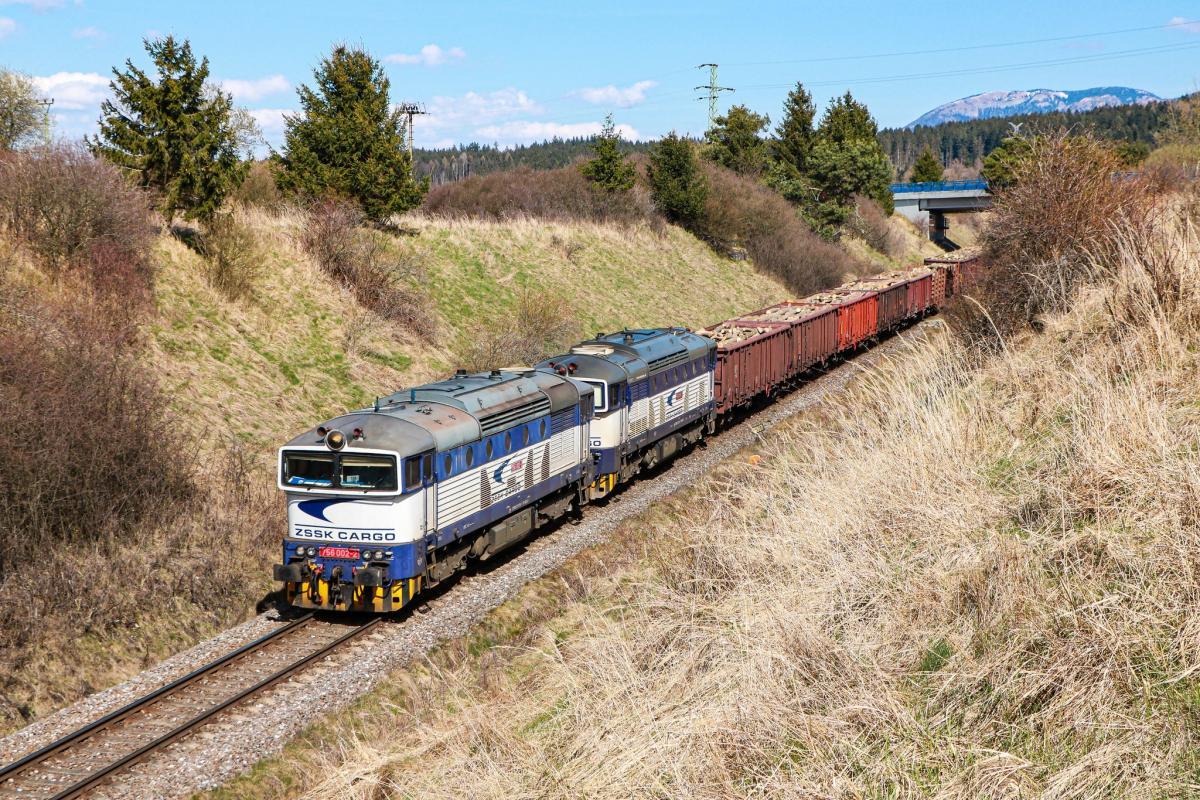
Timber from the south of Slovakia moves in a different pattern. In Zvolen, single wagonloads from various loading points in Pohronie and Podpoľanie are accumulated. Once enough wagons are available, they are formed into a consolidated collection train.
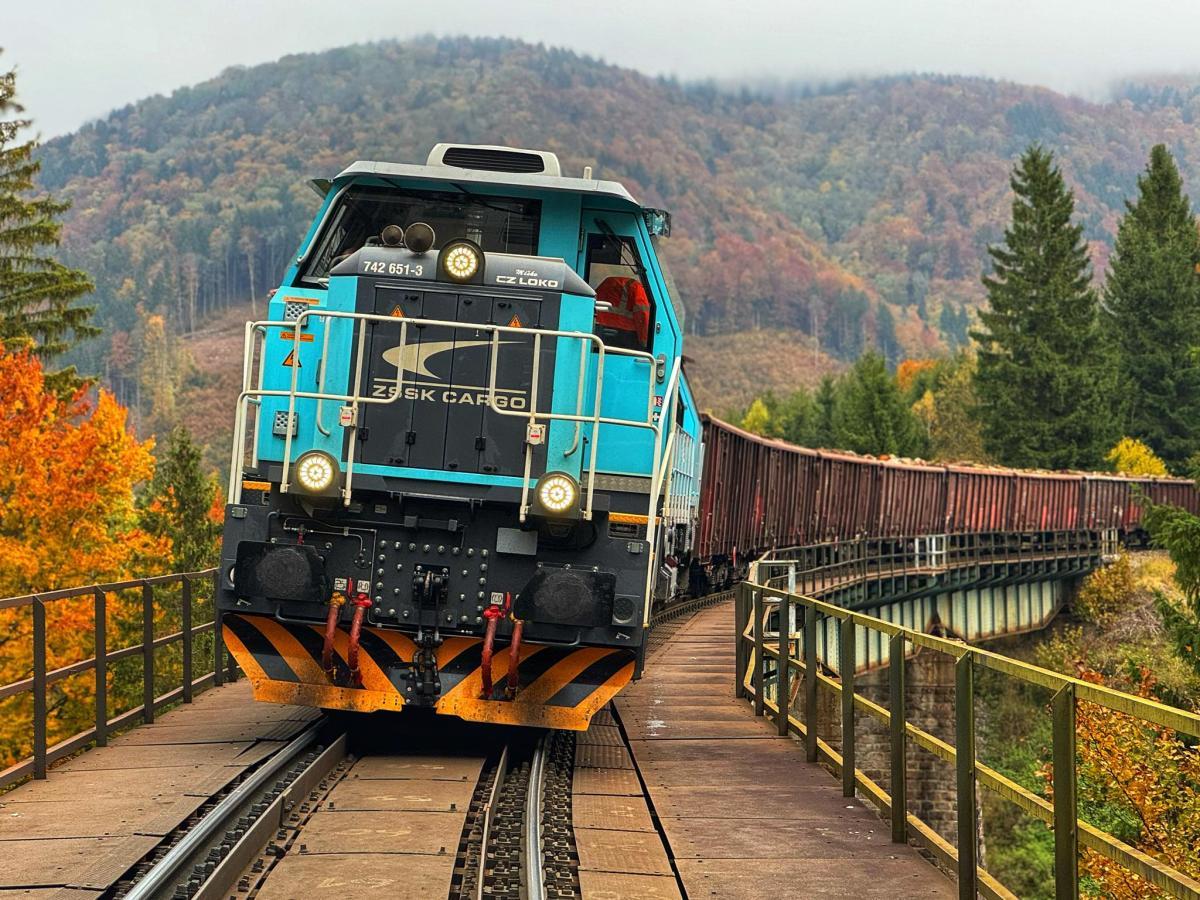
The train then runs to Lisková via Horná Štubňa under diesel traction, as the line through the Fatra area is not electrified. The operation follows a regular rhythm, with departures from Zvolen typically around twice a week.
This is an efficient way to use the wagonload system: individual wagons are first collected to a hub station, then dispatched as a train with sufficient trailing load directly to the customer. It reduces unnecessary shunting and intermediate stops.
Veľké Kozmálovce: truck collection, rail line-haul
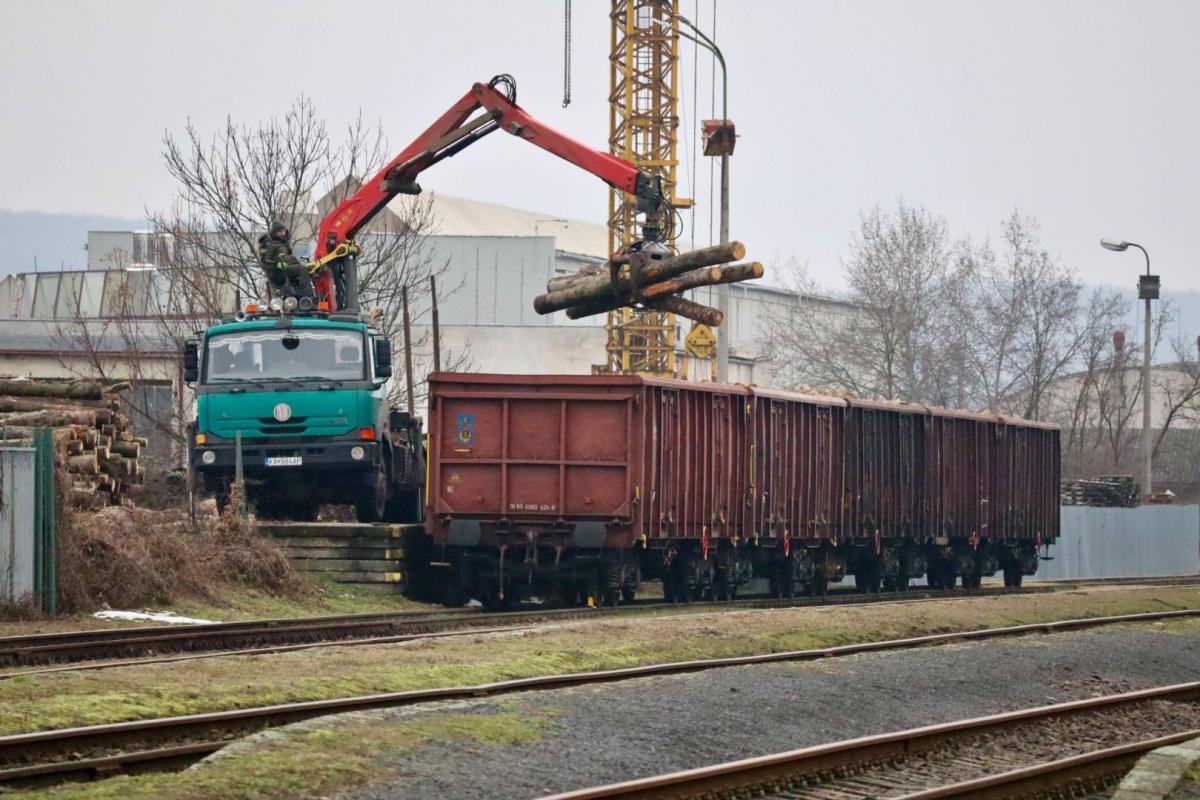
A notable hybrid solution is the terminal at Veľké Kozmálovce in the lower Hron valley. Here, hardwood is brought in by road throughout the week from surrounding forests. Once sufficient volume is accumulated, a full block train is dispatched to Lisková.
The model shows that road and rail do not have to be competitors; they can complement each other. Trucks handle short, dispersed pick-ups from forest roads and local depots where road is most efficient. Rail then takes over for the longer line-haul, where it typically offers lower costs per tonne-kilometre and a smaller environmental footprint.
Once enough volume has been collected, three to four block trains per month depart from Veľké Kozmálovce. Each train replaces dozens of truck journeys across central Slovakia.
East: resumption after possession works
More recently, flows from eastern Slovakia have also restarted. Following the end of a long-term line closure in the Humenné area, ZSSK CARGO has been able to renew timber movements from the region—and even expand them.
A key role is played by the timber yard in Strážske, where roundwood is stocked and then loaded into wagons. Importantly, it is not only local production: wagons also arrive from branch lines towards Medzilaborce and Stakčín—areas particularly rich in hardwood stands.
From Strážske, a direct block train is dispatched to Lisková. The consist includes wagons loaded at the Strážske yard as well as wagons brought in from surrounding branches. Operationally, it is an elegant solution: instead of multiple small stations sending fragmented wagon groups, volumes are consolidated at one point and moved in one go.
The drawdown of stock at Strážske is expected to continue until the end of January. If the model proves robust, it can become the basis for longer-term timber flows from eastern Slovakia to Ružomberok.
Eas wagons: the workhorses of the flow
Across these timber flows, ZSSK CARGO primarily uses high-sided Eas wagons. They are versatile assets, suitable for timber as well as scrap or aggregates. Having sufficient Eas capacity in the fleet enables flexible deployment as customer demand shifts. One Eas wagon typically carries the equivalent volume of two to three trucks. On distances of several hundred kilometres—such as Strážske–Lisková or Zvolen–Lisková—that difference translates into materially fewer road movements, lower emissions and reduced pressure on the road network.
Sustainability in operational terms
Timber is a renewable resource, and forests cover close to 40% of Slovakia’s territory. But logistics matters as much as harvesting: how the raw material reaches the processor determines the wider impact. A single block train of timber replaces roughly 50–70 truck trips. With regular flows feeding Lisková from several directions, that equates to thousands of truck movements per year that do not need to run on the road network—lower emissions, less road wear, and fewer congestion points. For Mondi SCP, rail offers a reliable supply channel. For ZSSK CARGO, timber remains one of the pillars of its wagonload segment—a commodity with long-standing relevance in Slovakia.
A system that works
Supplying the Ružomberok mill with timber is not a simple logistics task. It involves coordinating loadings at dozens of points, accurate wagon sorting in marshalling yards, diesel traction over non-electrified sections and careful timing of arrivals at the mill siding.
That very complexity highlights the value of a full-network operator. ZSSK CARGO can serve the customer from any part of Slovakia and merge the flows into a single destination. In Lisková, west meets north, south meets east. Roundwood is then turned into pulp, paper and packaging—products used every day.
For rail timber transport options, please contact the relevant ZSSK CARGO commodity or regional commercial manager: https://zscargo.sk/en/contacts/sales-managers