News
Slovakia at the heart of European rail freight: export, imports and—above all—transit
Slovakia is a small market when it comes to purely domestic freight flows. Yet its position in the middle of the continent makes it a natural rail crossroads, where cargo streams linked to the Adriatic, the Baltic and the Black Sea meet. In that setting, ZSSK CARGO is more than a domestic operator: it is one link in a European logistics system that moves thousands of tonnes of raw materials and finished products every day—east to west, and north to south.
Rail freight is European today
The days when freight rail mainly served to supply national industry from national sources are long over. Economic transformation, the restructuring of large state-owned enterprises and integration into the European market have reshaped demand. Today, most goods carried by rail are bound for destinations beyond the country’s borders—whether as exports of Slovak output, imports of raw materials and components, or transit traffic between third countries.
For ZSSK CARGO this means a different job description. It is no longer only about moving wagons from point A to point B within Slovakia. It is about being a dependable partner in supply chains that connect Adriatic ports with industrial centres in Poland, Ukrainian agricultural regions with processors in Western and Southern Europe, and Southern European production sites with construction demand in Central Europe.
Export: slag from Košice to the West
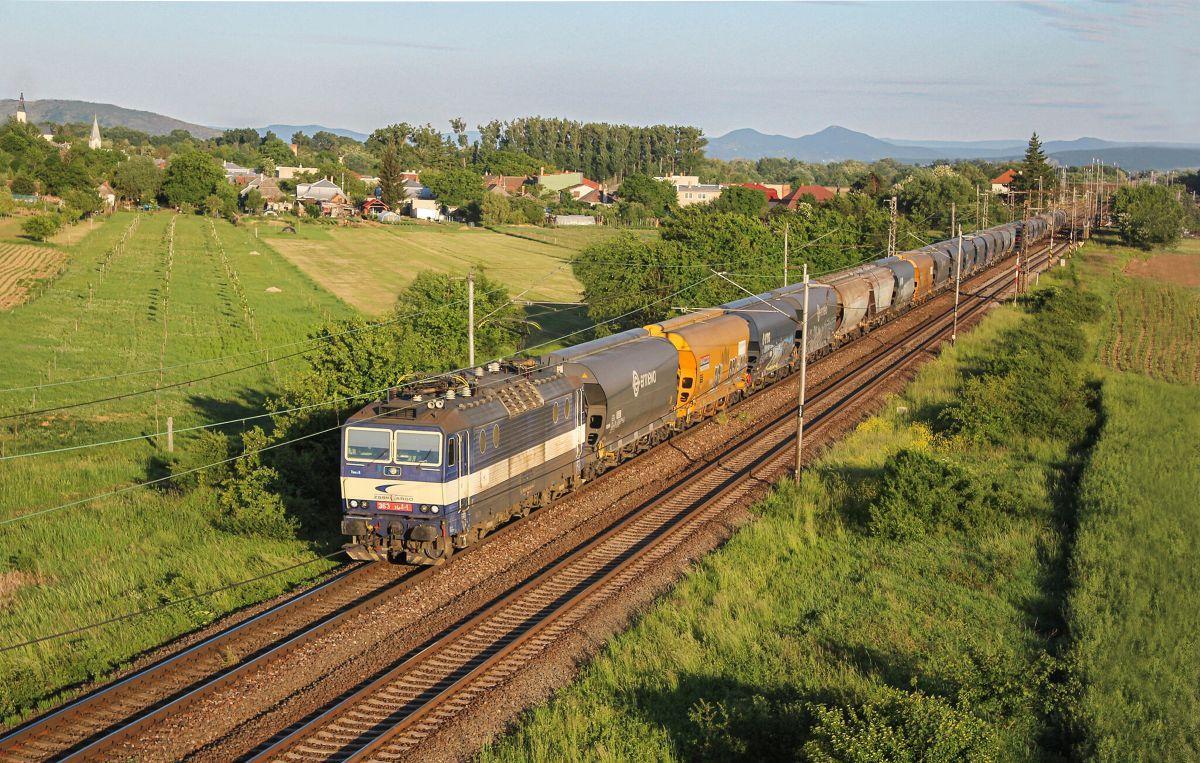
One of the latest export movements is the rail transport of slag from the Košice steelworks. As a by-product of metallurgical production, slag has a well-established role in construction and roadbuilding in Western Europe.
ZSSK CARGO provides an end-to-end solution: its own Falls wagons suitable for bulk commodities, together with electric traction along the full east–west route across Slovakia. The corridor includes technically demanding sections where the performance of modern electric locomotives becomes a clear operational advantage.
This flow also illustrates a wider trend in European industry: a by-product in one sector becomes a valuable input in another. Rail freight fits this profile—large volumes, repeatable train paths, and low emissions per tonne-kilometre.
Export: agricultural commodities from Slovakia to Southern and Western Europe
Slovak agriculture produces more than the domestic market consumes. Maize, soya and wheat therefore move to export markets—and rail is a natural mode for these commodities.
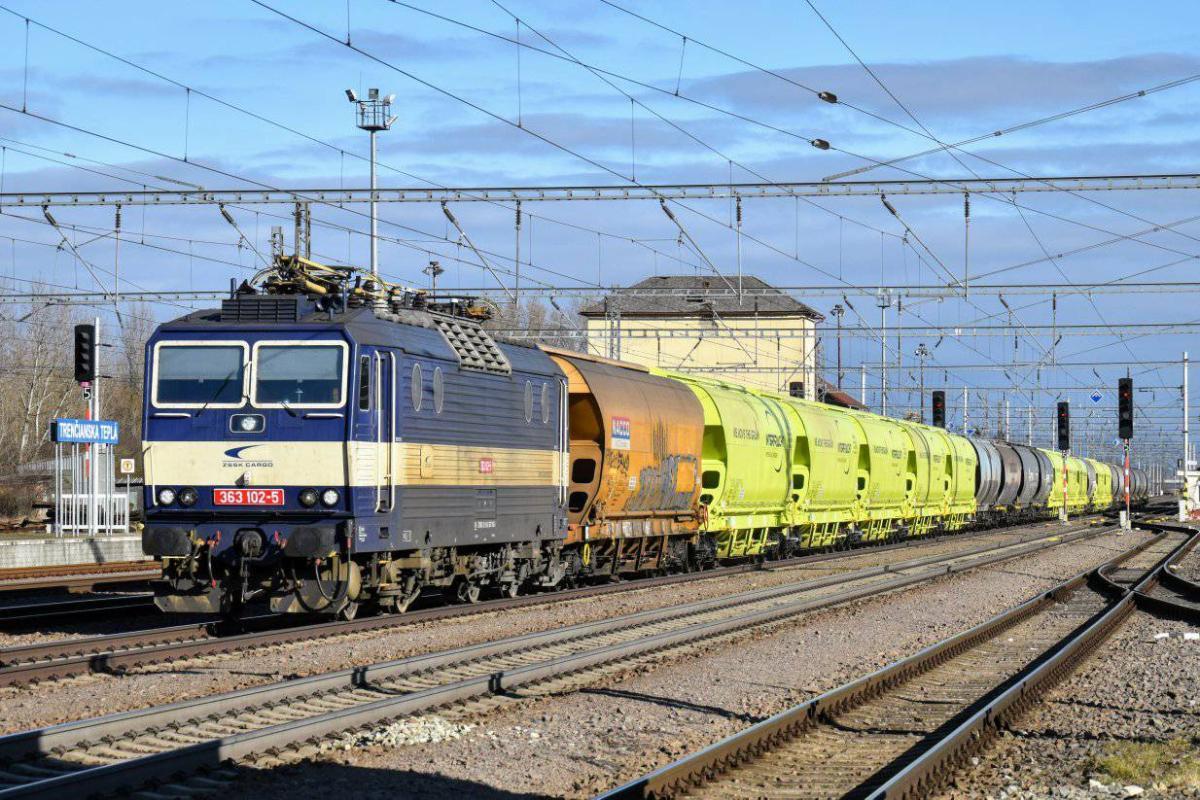
ZSSK CARGO organises shipments from multiple loading stations in Slovakia to a range of destinations across Europe. The commodities are loaded into specialised wagons and travel hundreds of kilometres to processors or to ports for onward maritime transport.
For food and feed commodities, reliability and transport hygiene are critical. Rail can provide both—along with capacity that road haulage can struggle to match during seasonal peaks after harvest.
Imports: construction materials
The modernisation of Slovakia’s rail infrastructure requires very large volumes of materials. Construction aggregates and related inputs are among the key components, and in the previous year they were supplied from Southern Europe.
Throughout 2025, ZSSK CARGO handled these import movements. Operationally, they are demanding: coordination with the producer, transit via Hungary, and precise delivery to worksites that are moving along the corridor. ZSSK CARGO provided not only traction, but also its own wagons—integrating rolling stock and locomotive services into one transport package.
Transit, east–west: agricultural flows to Western Europe
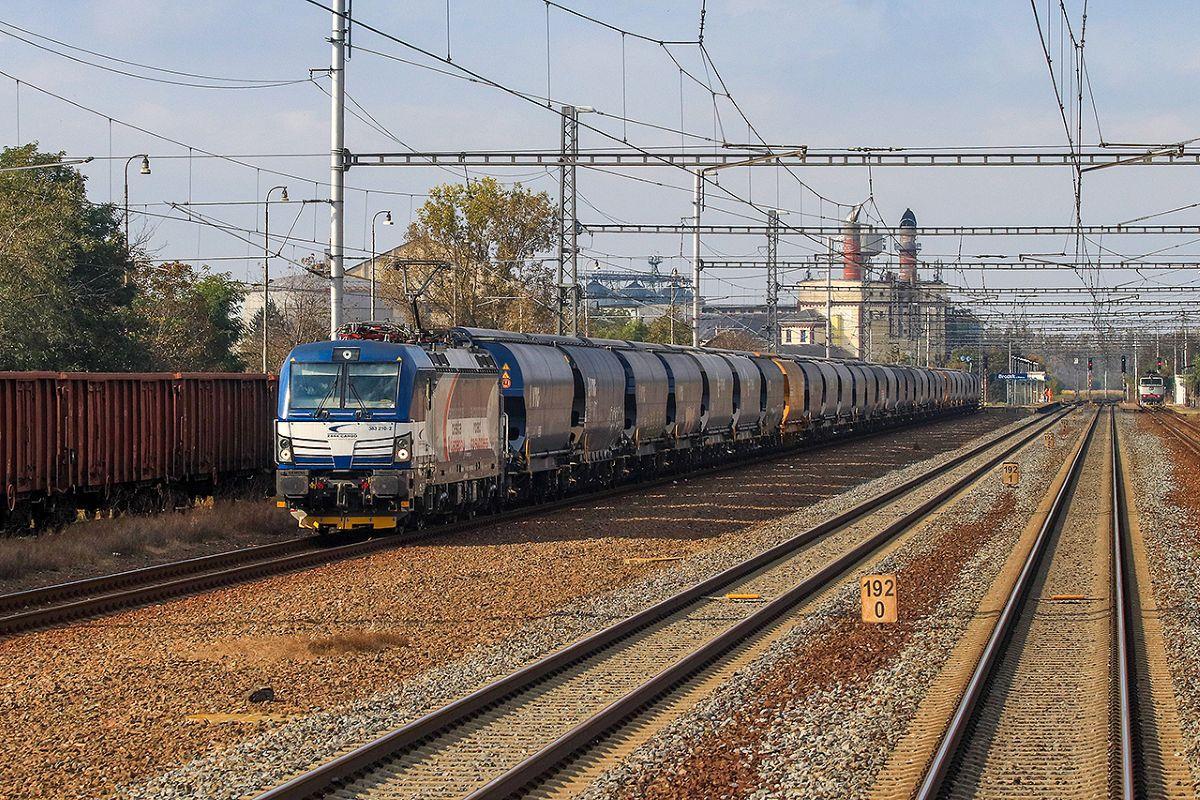
From the beginning of 2026, ZSSK CARGO has provided traction for agricultural consignments moving through Slovakia towards Western Europe. These flows pass across the country to processors and distributors in the western part of the continent.
In this role, Slovakia functions as a bridge. Transit trains do not directly supply domestic industry, but they generate revenue for operators and keep the network utilised. Every transit train that runs across Slovakia by rail rather than shifting onto the road network supports both environmental objectives and traffic safety.
Transit, north–south: Polish agricultural products to Southern Europe
North–south flows are also gaining momentum, with Polish agricultural products transiting Slovakia. Poland is a major producer, and markets in Southern Europe—whether for feed or further processing—represent stable demand. Routing via Slovakia is logical for these movements: it is shorter and faster. ZSSK CARGO again provides traction and the operational know-how of a full-network carrier—one that understands the characteristics of every station and every kilometre on the route. This is another example of north–south transit where the goods move through Slovakia—and the country benefits through infrastructure charges that can be reinvested into network upgrades.
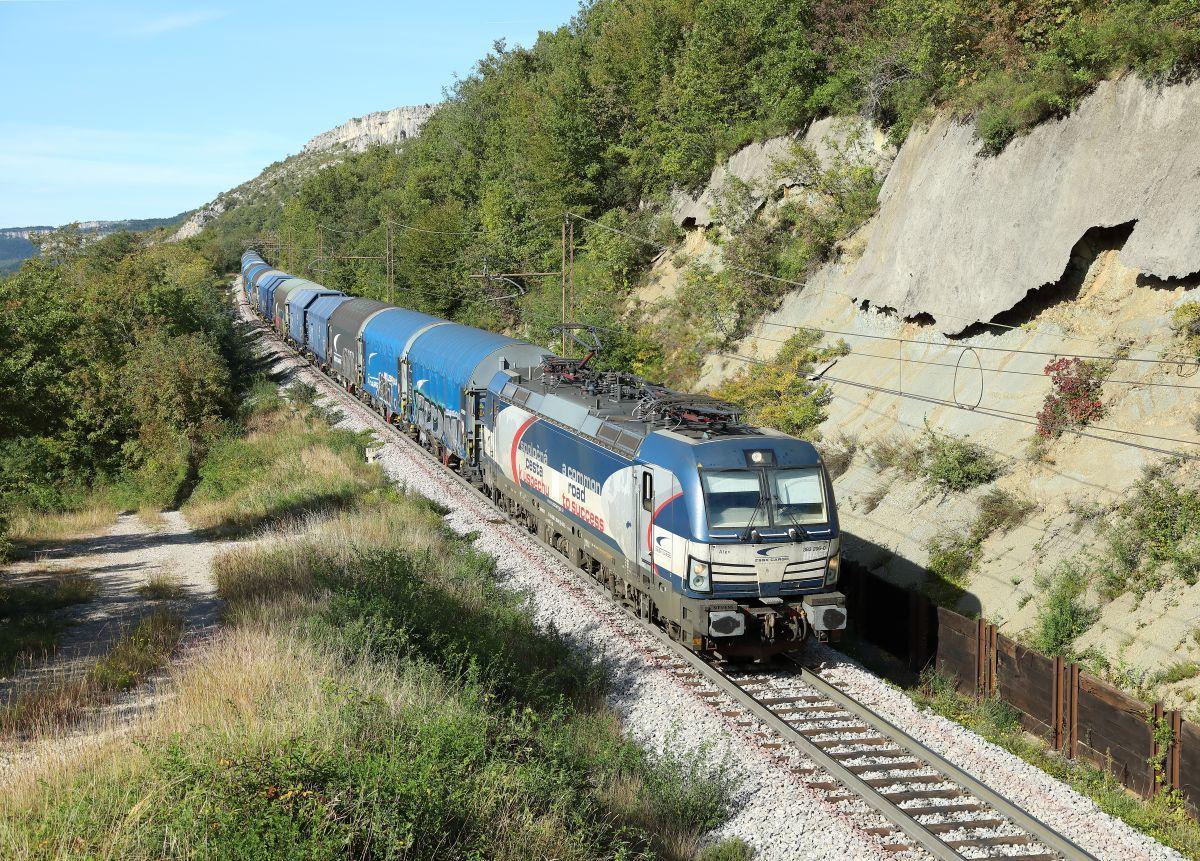
ZSSK CARGO’s covered wagons have also been deployed on agricultural flows from Poland to Southern Europe. Agricultural commodities often require protection from weather exposure. With sufficient covered-wagon capacity in its fleet, ZSSK CARGO can allocate equipment flexibly to where demand arises. Whether for foodstuffs, chemicals or manufactured goods, covered wagons remain a versatile solution for weather-sensitive cargo.
The Three Seas region: an opportunity for Slovakia
A look at the map explains Slovakia’s position in European freight. The country lies in the area frequently described as the Three Seas region—between the Adriatic, the Baltic and the Black Sea. The main rail corridors linking these three basins intersect in Central Europe.
Switzerland has benefited for decades from Alpine transit, particularly in intermodal traffic where containers and semi-trailers move from Italian ports to Germany and beyond. In Central and Eastern Europe, a comparable model is not yet operating at full scale—but the potential is clear.
Slovakia can serve as a connector and a hub where flows from the south, north and east meet. Adriatic ports—Koper, Trieste and Rijeka—are looking for efficient hinterland routes. Baltic ports—Gdynia and Gdańsk—seek stronger links to the south. And the Black Sea, via Ukrainian and Romanian infrastructure, remains a gateway towards Asia.
What ZSSK CARGO brings to the table
Within this mosaic of European traffic, ZSSK CARGO has tangible assets to offer. Above all, electric traction across the entire ŽSR network—from Čierna nad Tisou to Bratislava, and from Čadca to Štúrovo. In addition, it operates its own wagon fleet: high-sided Falls and Eas for bulk commodities, Res flat wagons for long loads, and covered wagons for sensitive cargo.
Combined with full-network coverage, detailed local knowledge and the ability to coordinate cross-border operations with partners in neighbouring countries, ZSSK CARGO is not “only” a Slovak operator—it is part of a European freight system connecting dozens of markets.
A small country, big flows
Slovakia will never have a domestic freight market comparable to Germany or France. That is precisely why international traffic is both natural and necessary. Exports of Slovak production, imports of raw materials and components, and—above all—transit are the three pillars that will shape the future of rail freight in the country.
ZSSK CARGO states that it is ready to deliver on this role: with modern locomotives, sufficient wagon capacity and experience in international operations. Slovakia may be small, but it sits at the heart of a continent whose logistics are being reshaped—and where rail has a clear role in that transformation.
For export, import and transit rail freight opportunities, please contact the relevant ZSSK CARGO commercial manager: https://zscargo.sk/en/contacts/sales-managers