News
Novaky's chemical hub shows why single wagonload rail freight must be preserved
Rail transport and the chemical industry in Novaky have been linked for more than 80 years. Today, however, the future of single wagonload traffic depends on stopping a trend of falling volumes and rising costs that is gradually weakening the competitiveness of rail freight.
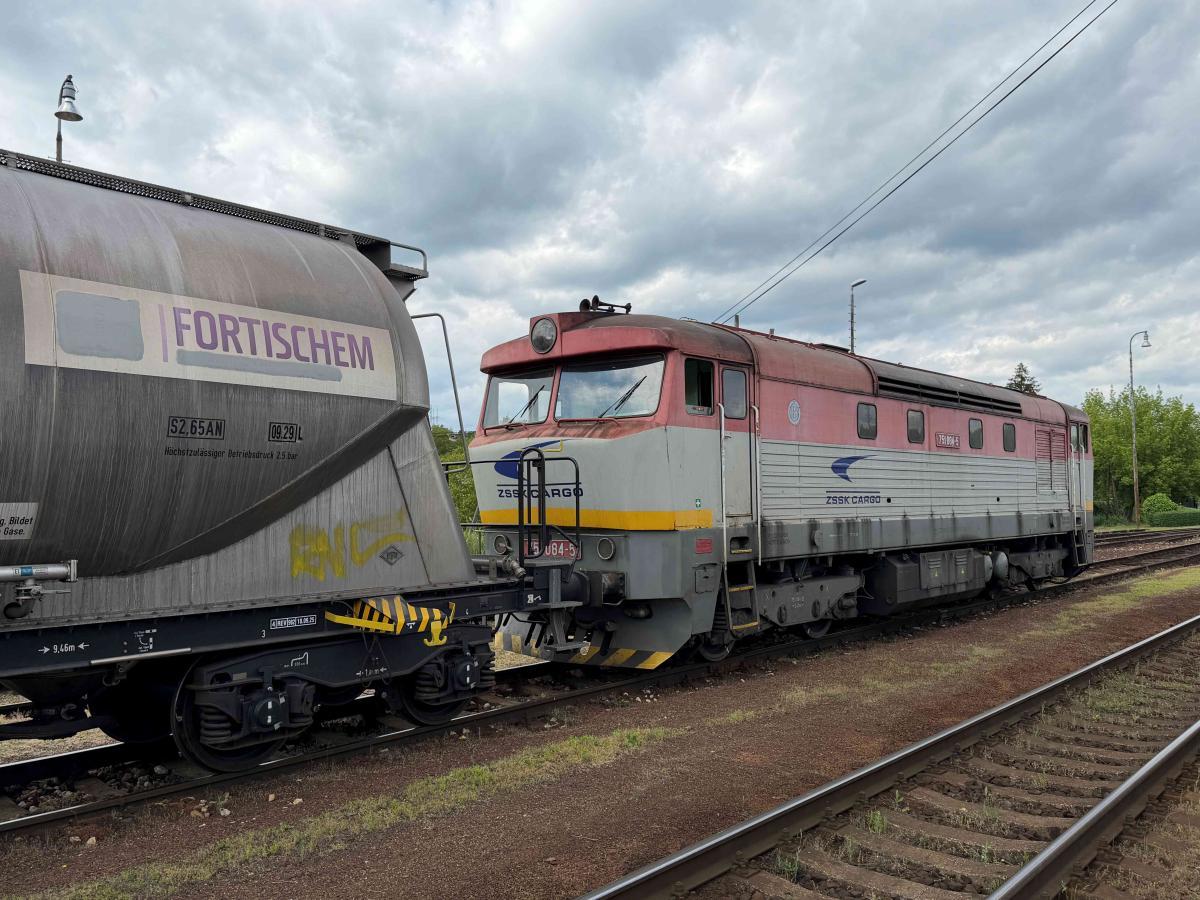
FORTISCHEM in Novaky is one of Slovakia's key industrial companies, with a history inseparable from rail transport. As a stable customer and consignor using ZSSK CARGO's single wagonload traffic system (SWT), it still shows that environmentally sound rail freight has a clear role in strategic industry. At the same time, rail logistics in the chemical sector now faces challenges that require urgent systemic attention and state support.
A history built into the tracks
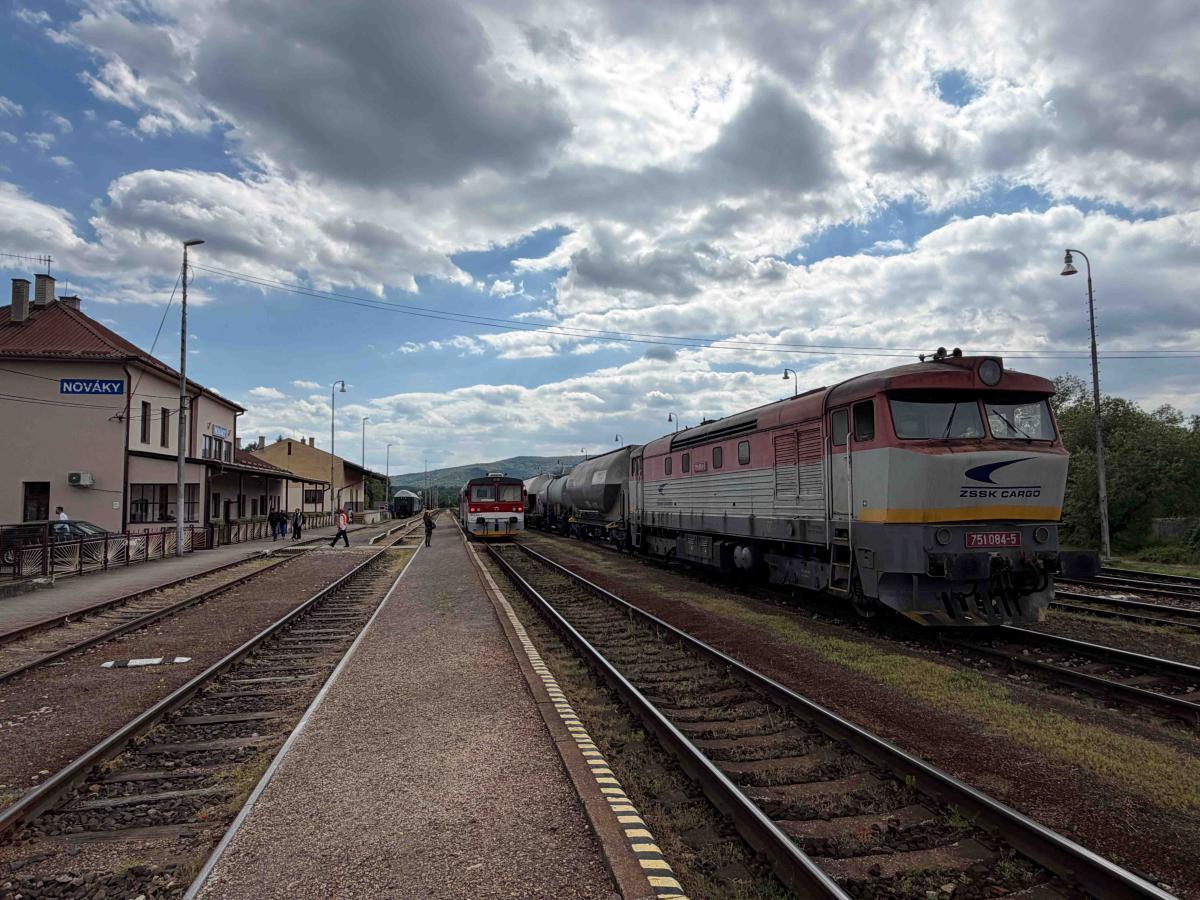
The roots of the Novaky plant go back to 1940, when the first electrolysis unit was built there. Production gradually expanded to calcium carbide in 1952, monomer and PVC in 1960, and later to window profiles and specialty organic chemicals. From the beginning, the entire site was designed with rail transport in mind. The plant has its own extensive industrial siding network, almost 20 kilometres long.
"The plant itself was historically built around rail transport. All internal logistics and warehouses were designed so that goods could be loaded directly into railway wagons. The roads between the tracks here are so narrow that two trucks often cannot pass side by side, which clearly shows how strongly the plant historically preferred rail transport," explains Miroslav Moniak, transport logistics manager at FORTISCHEM.
At the peak of operations, Slovakia's only nationwide rail freight carrier served the siding six to eight times within 24 hours, in continuous operation. Several hundred thousand tonnes of raw materials moved by rail each year, mainly coke, lime and rock salt from Ukraine.
Changing flows and today's reality
As in other sectors, Novaky has experienced a major logistics shift in its modern history. EU legislative restrictions led in 2018 to the shutdown of the old, environmentally non-compliant mercury electrolysis process and its replacement with modern membrane technology. This technological upgrade, however, changed the plant's commodity flows. Coarse rock salt from Ukraine was no longer suitable for the membranes, so the plant switched to clean vacuum salt sourced within Europe.
At the same time, rail transport for smaller wagon groups began to lose competitiveness in terms of flexibility, service frequency and delivery times. The result was that volumes of coke, salt and lime gradually moved from rail to road more than a decade ago. The historical transport split of 80% by rail and 20% by road has shifted to today's 30% by rail and 70% by road. For outbound wagonload consignments, siding service has been reduced to three days a week, once per day.
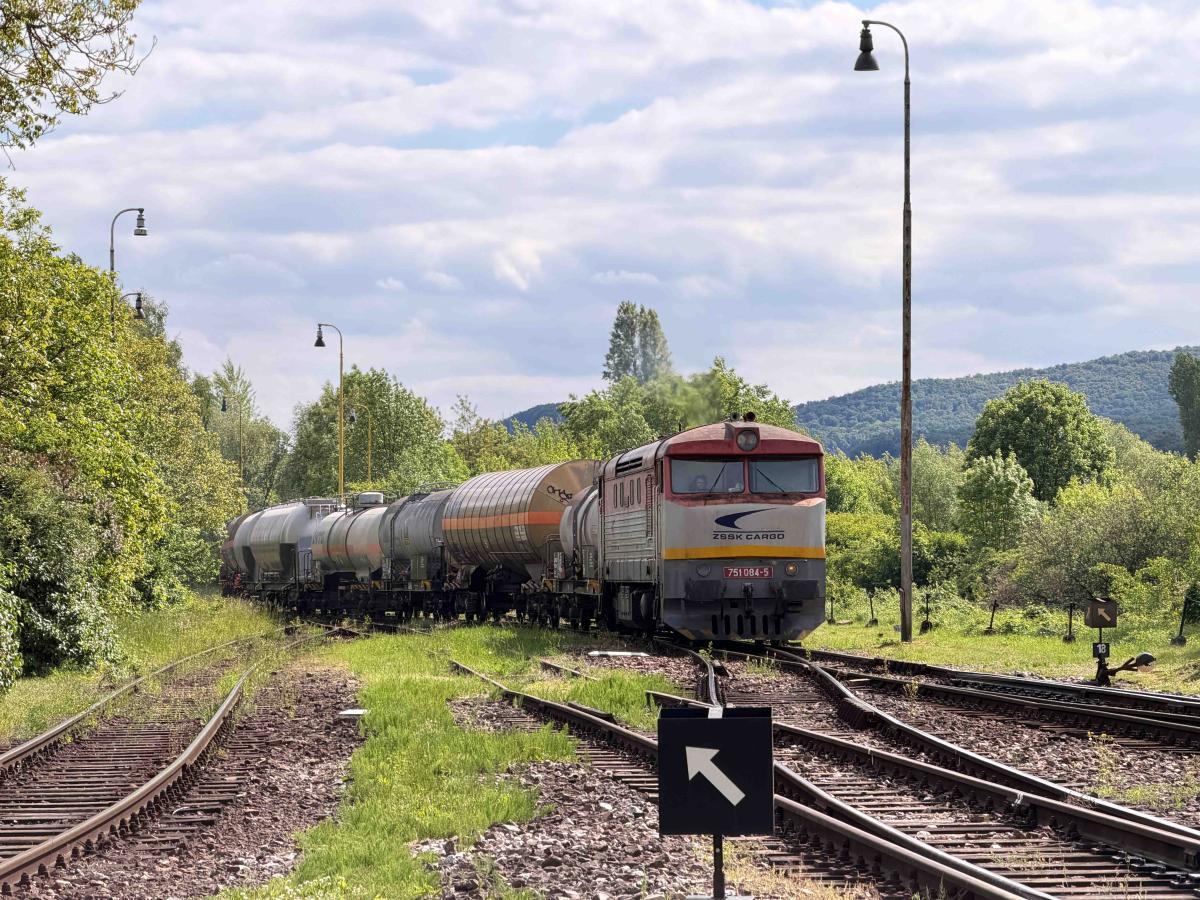
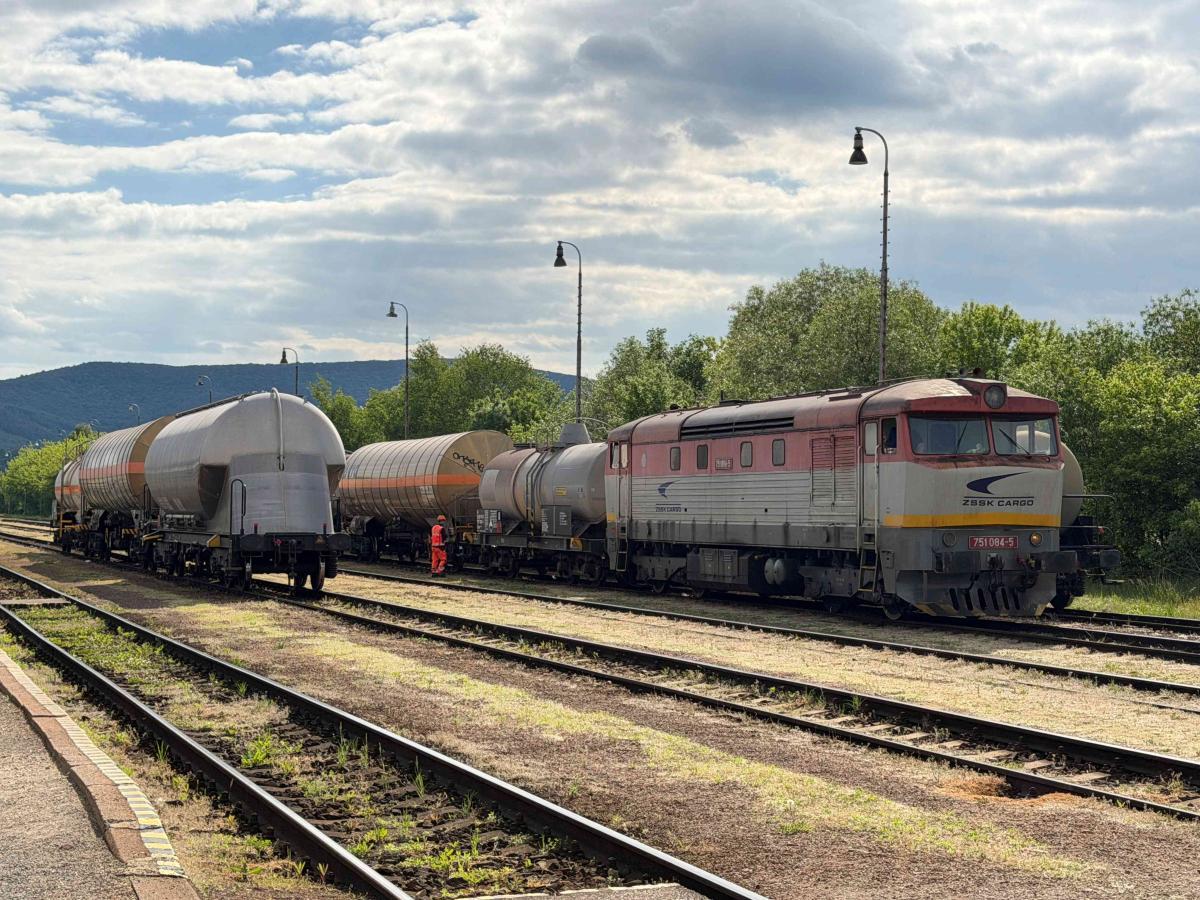
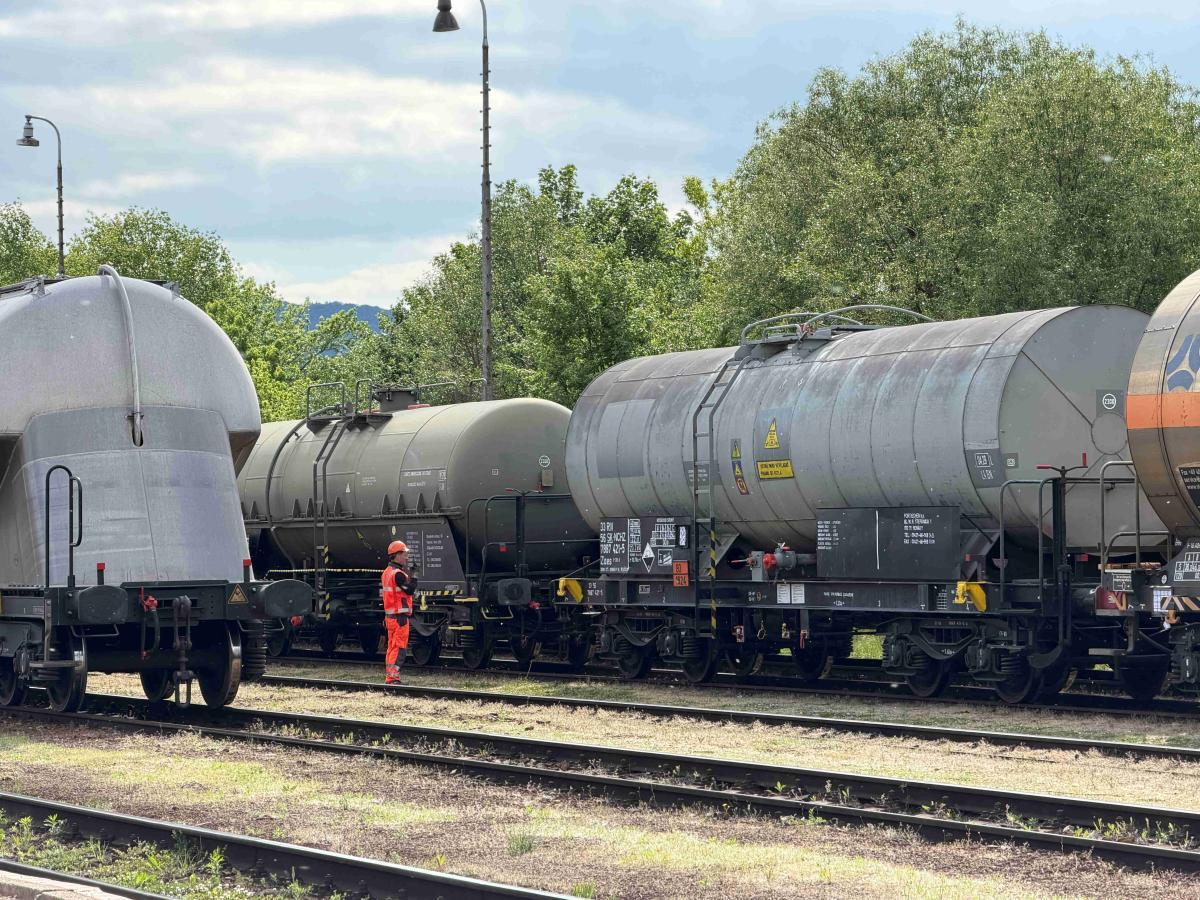
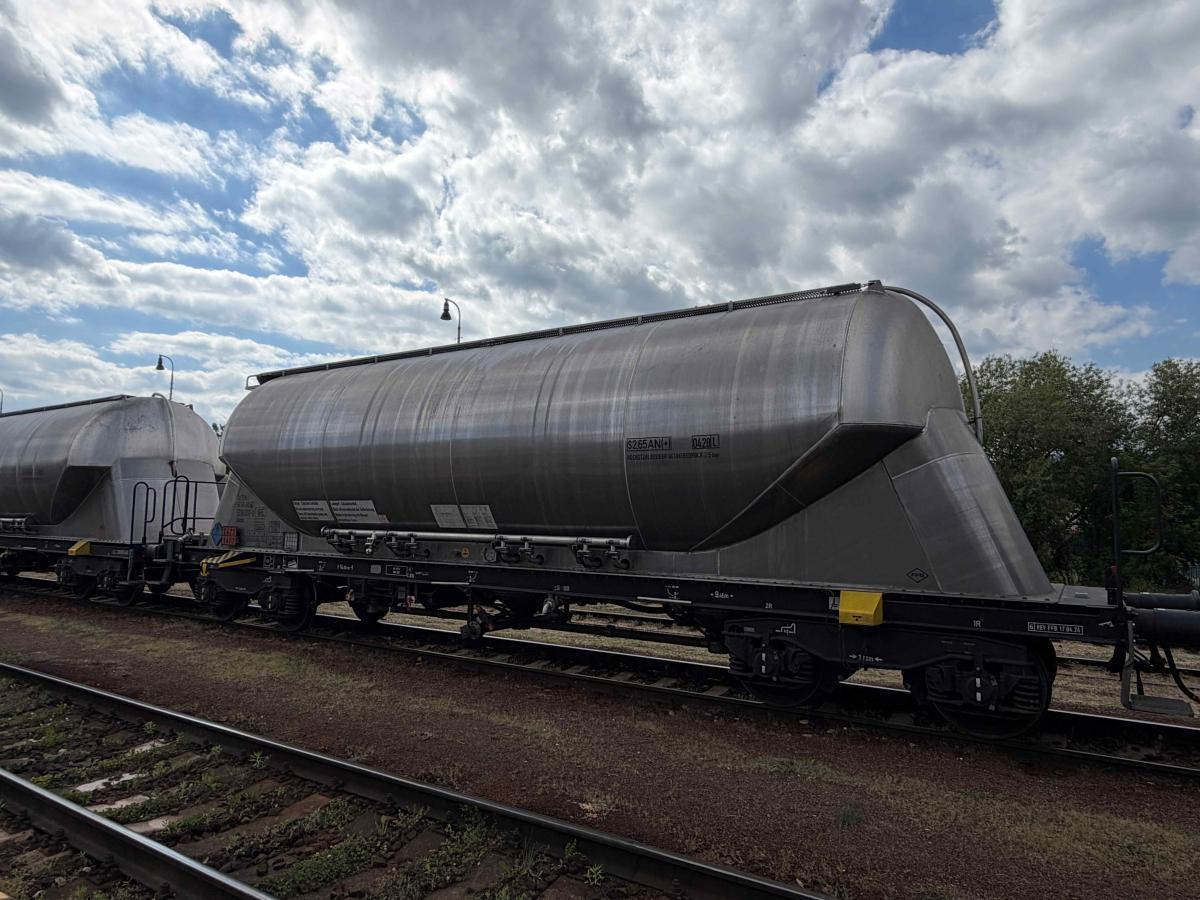
Even so, rail remains essential for FORTISCHEM's dispatch of finished products. These include liquid electrolysis products such as sodium hydroxide, hydrochloric acid, sodium hypochlorite and liquid chlorine, as well as powdered carbide mixtures. Some liquid chemical products are transported to partners in Ukraine in Ukrainian tank wagons regauged onto standard-gauge bogies. Carbide mixtures are exported over long distances to Germany, Austria, Belgium and France in modern Uacns powder wagons. Most customers, however, are industrial companies from different sectors within a radius of roughly 500 kilometres from Slovakia.
For dispatch, FORTISCHEM uses both owned and leased wagons, with total capacity of around 200 wagons. Several dozen are leased from rolling stock leasing companies, while the company also owns wagons of its own, mainly older tank wagons for specialty chemicals. As transport of powdered carbide mixtures has increased, FORTISCHEM purchased 20 new Uacns wagons in 2024-2025 and leases additional wagons. Because this product segment has growth potential, a further fleet increase is also under consideration, provided the single wagonload system can be preserved.
Vital single wagonloads
Why is single wagonload traffic so important for FORTISCHEM? The reasons are practical and customer-driven.
"For dispatching our products, single wagonload transport is logistically essential. We have a broad customer portfolio, and very few customers have the storage capacity and consumption levels needed to take a full block train at once. Rail allows us to move larger quantities in a more environmentally friendly way. For the customer, there is also a major advantage: while a truck must be unloaded immediately, a rail wagon effectively gives them more time and serves as temporary storage," says Miroslav Moniak.
If the SWT system were to collapse, the only alternative would be a complete transfer of the remaining volumes to already congested roads. That would put hundreds of trucks carrying chemical products onto the road every day, creating a major risk to human life and health, as well as to the environment in the event of contamination after an accident.
FORTISCHEM is considering all available options, including grouping dispatches into one block train per week instead of dispatching wagon groups several times per week. But this would remove the company's flexibility almost entirely. Wagon turnaround would fall sharply, customers would either lose the ability to use wagons as temporary storage or be unable to handle such a large number of wagons delivered at once. It would also require unsustainable investment in the purchase or lease of a very large number of new tank wagons.
A vicious circle and the need for state intervention
The current situation in Slovakia's single wagonload segment has reached a critical point. The whole system is trapped in a dangerous vicious circle: the more consignments move to road because it is easier, the less volume remains for rail. Lower volume means fewer trains, fewer regular siding services and less flexibility. Because rail's fixed costs have to be spread across fewer wagons, the transport price for the end customer rises sharply every year. Higher prices and lower flexibility then push more customers onto the road.
In Slovakia, this technologically and cost-intensive logistics system is being kept alive only by the national carrier ZSSK CARGO, as private operators have no interest in financially unattractive single wagonload traffic.
"The situation is becoming critical. Without a systemic form or scheme of state aid, I do not see it as realistic in the future. Costs continue to rise and the rail segment would need an overall restart. Existing discounts for the use of railway infrastructure have become only a minimum standard, and even those have been repeatedly under threat in recent years," warns Miroslav Moniak.
State support is therefore not an artificial market subsidy, but a necessary systemic step to break out of this circle. According to sector experts, the state has two strategic options:
- Direct financial support for SWT: targeted support for the demanding technology of single wagonload traffic, which would help put rail freight operators on a more equal economic footing with road transport.
- Financial support for domestic intermodal transport: investment in small inland terminals and transhipment flows that would allow road and rail to cooperate efficiently through containers, swap bodies and liftable semi-trailers.
For industrial companies such as FORTISCHEM, however, a move to intermodal transport would require a complete and extremely costly transformation.
"Our plant was built for conventional wagons. Using containers would require completely new handling areas, heavy transhipment equipment and intervention across the company's entire infrastructure. Today, when global conflicts and market volatility make it impossible to plan months ahead with confidence, such investments are financially unimaginable for an industrial company. Without systemic state support, it is simply not feasible," concludes Miroslav Moniak.
FORTISCHEM's example shows that single wagonload traffic remains an important part of the logistics chain for part of Slovak industry. The future of this segment will depend on finding an economically sustainable model that reflects the needs of industry, rail freight operators and the public interest in shifting freight from road to rail.